


Germany102 Tonnes, Five Stops: inside Chapman Freeborn's complex |
More than 102 tonnes of cargo, five intermediate stops and a route complicated by high summer temperatures and restrictions linked to the conflict in the Middle East. These were some of the operational challenges behind an Antonov An-124 charter from Germany to Malaysia in July 2026.
Arranged by Chapman Freeborn, the flight carried a power plant generator rotor and its transport frame from Stuttgart to Malaysia following specialist repair work in Europe. While the aircraft's size and exceptional cargo attracted public attention, the operation also required careful planning and close coordination between the company's teams in Germany and Singapore.
With a total cargo weight of 102,847 kg and limited routing alternatives, the charter presented technical and logistical challenges that extended beyond the loading operation at Stuttgart Airport.
A heavy-lift operation with limited options
The generator rotor had undergone specialist repairs in Germany and final high-speed balancing in the United Kingdom before being prepared for its return to a power plant in Malaysia. The component was needed to restore the plant's generating capacity, making transport time an important consideration.
Shipping the rotor by sea would have taken approximately two months each way, depending on the ports involved. Air transport offered a significantly faster alternative, reducing the time the component remained in transit.
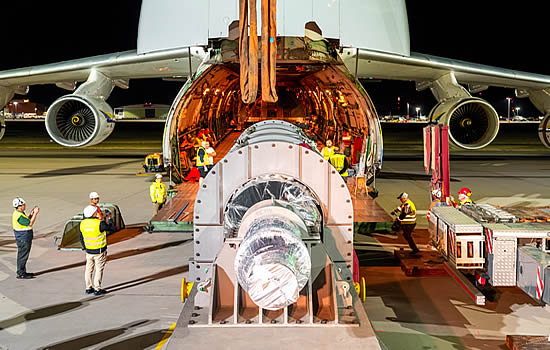
The cargo's exceptional weight and dimensions required an Antonov An-124. At Stuttgart Airport, specialist lifting equipment was used to transfer the rotor and its transport frame from a heavy-duty road transporter into the aircraft, with careful attention to positioning and weight distribution.
Once airborne, the shipment's weight limited the amount of fuel the aircraft could carry, requiring five intermediate stops. High summer temperatures introduced further aircraft performance considerations, while restrictions linked to the conflict in the Middle East narrowed the available routing options.
"With a shipment of this scale, the challenge is not just finding an aircraft capable of carrying the cargo, but managing the operational constraints that come with it," said Anton Lomakin, VP Cargo Airchartering - ASEAN at Chapman Freeborn. "When routing and scheduling options are limited, anticipating potential difficulties becomes particularly important."
When coordination spans continents
While the aircraft's technical limitations shaped the flight plan, keeping the operation on track required continuous communication between Chapman Freeborn's teams in Germany and Singapore.
Max Pätzel, Cargo Charter Broker at Chapman Freeborn in Germany, regularly started work as early as 5–6 am local time, while colleagues in Singapore worked until 1–2 am to coordinate decisions with stakeholders across different time zones.
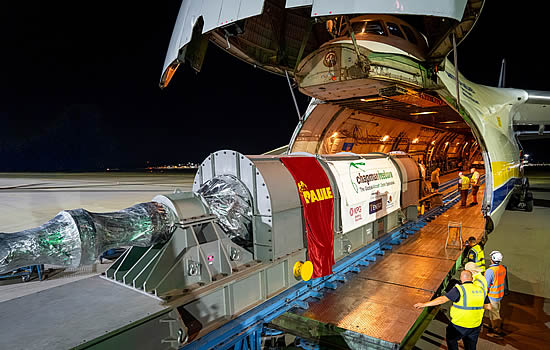
Beyond the flight planning itself, the teams had to coordinate cargo safety and customs inspections, specialist handling equipment, airport slot availability and restrictions affecting oversized ground transport. These requirements had to be managed in a carefully planned sequence, with much of the coordination taking place over the weekend and within limited operational windows.
"With so many parties involved, there were several critical decisions to be made at different stages of the shipment," said Pätzel. "Working across time zones meant staying in close contact with our colleagues in Singapore, so we could respond quickly and keep the operation moving."
Planning for the unexpected
The operation illustrates a broader consideration for companies moving exceptionally heavy or time-sensitive cargo: aircraft availability alone does not determine whether a shipment is feasible.
Payload limitations, airport infrastructure, specialist handling requirements and the availability of suitable routes can all influence the transport plan. When external restrictions further reduce the available options, identifying potential obstacles early becomes particularly important.
For the customer, the operation demonstrated the value of working with experienced charter specialists. Compared with previous charter experiences, having a team that could anticipate operational constraints, coordinate multiple parties and manage complications made the process considerably easier. The case also highlights why specialist expertise matters when planning complex heavy-lift shipments.
The generator rotor reached Malaysia following a journey that required careful management of technical limitations and coordination across continents. Although the Antonov An-124 attracted attention for its size and carrying capability, the operation also revealed the extensive planning and decision-making involved in moving exceptional cargo across international borders.



BlueSky Business Aviation News | 19th November 2026 | Issue #867
