


 |

The same but differentBy Dawit Lemma, Chairman of the African Business Aviation Association. |
A growing number of regions in Africa offer varying levels of business aviation operational support. Dawit Lemma, Chairman of the African Business Aviation Association (AfBAA), discusses the diversity across the continent and highlights the characteristics that define the differences.
Business aviation is rapidly growing across Africa, having surged to record levels in 2025, with flight activity increasing by 12.3% year-on-year. While this growth has boosted international operators' confidence in the market's vast potential, the diverse capabilities, needs, and wealth of the more than 50 nations mean that different regions are evolving at different paces.
Navigating national authorities, local protocols, operational limits, and varying infrastructure makes flight consistency across different regions less predictable than in more established markets, but things are changing and improving constantly.
Unlocking freer movement across the continent will require further regional investment in support infrastructure and training, as well as the standardization of regulatory requirements.
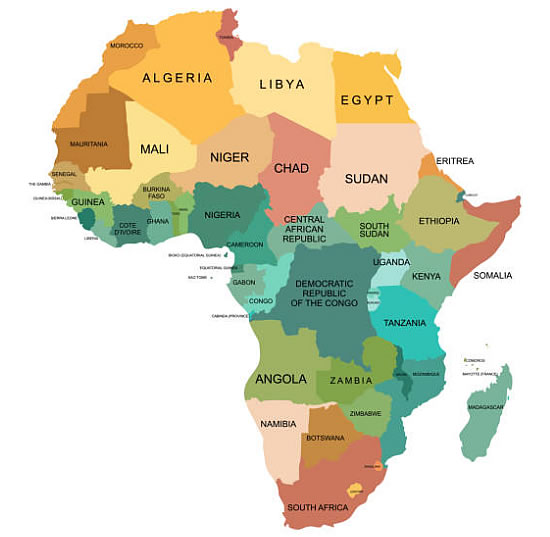
Southern Africa remains the most mature market, supported by stable regulation, robust infrastructure, and experienced operators. Development in the region is centered on South Africa, where an established and active market is supported by world-class facilities, with regional support extending into neighboring countries such as Namibia and Botswana.
Johannesburg boasts Africa's highest concentration of High-Net-Worth Individuals (HNWIs) and the largest business jet fleet, with some 70 aircraft. Major international FBOs and technical support providers operate throughout the region, including Airbus Helicopters Southern Africa, which provides maintenance, assembly, and training support for the region’s more than 600 executive and medevac helicopters.
The development of business aviation in West Africa has been driven by the economic growth in the oil, gas, and energy sectors. The region is actively upgrading its aviation infrastructure to boost safety, improve fuel efficiency, and reduce its dependence on overseas maintenance.
We’ve also noted that Nigeria acts as a springboard for many international operators seeking to enter the market for the long term. The Nigerian Federal Government recently announced a partnership with private entities to launch a fully compliant domestic MRO facility that will operate under Nigerian Civil Aviation Authority (NCAA) regulations, drastically reducing the need to ferry aircraft overseas for routine or unscheduled servicing. Lagos, the largest city in Africa and Nigeria’s business capital, is home to a fleet of 62 business jets.
While regulatory complexity and infrastructure gaps remain, key gateways like Lagos, Accra (Ghana), and Dakar (Senegal) continue to evolve into reliable aviation hubs equipped with high-quality FBOs, hangarage, fueling, maintenance, and VIP terminals.
While a little less developed, East African aviation is growing, propelled by tourism, humanitarian missions, and regional institutions such as the African Union. Addis Ababa in Ethiopia and Nairobi in Kenya are the main anchors for a dynamic yet consolidating market. Rising tourism has sparked demand for versatile aircraft capable of navigating the region's diverse terrain and routes.

Ground handling services vary greatly across the continent | Photo: VIP Aero.
This growth is backed by an expanded regional support ecosystem, with major hubs like Nairobi (Wilson Airport) and Addis Ababa (Addis Ababa Bole International) offering comprehensive services including private charters, maintenance, and concierge services. Key support includes cargo handling, ground support, and specialized, high-demand aircraft.
The northern countries in Africa benefit from tourism, wealthy private users, and proximity to the busy European and Middle Eastern markets. They have provided increasingly important alternative routes since the conflict broke out in the Gulf. Specialized handling and on-demand fueling are available at major North African airports and the region benefits from improved international maintenance standards, particularly in emerging markets like Egypt and Morocco, which are investing in and promoting labor, property and workforce benefits even while bureaucracy and legacy systems often constrain agility.
Cairo is a major hub with high-end FBOs providing expedited immigration, luxury lounges, and dedicated VIP services. While primary hubs boast state-of-the-art facilities rivaling those in Europe, operators flying into Northern Africa should be prepared for varying levels of infrastructure availability outside capital cities. Planning ahead through established third-party handlers is strongly recommended to navigate fluctuating aviation fuel logistics and specific local permit timelines.
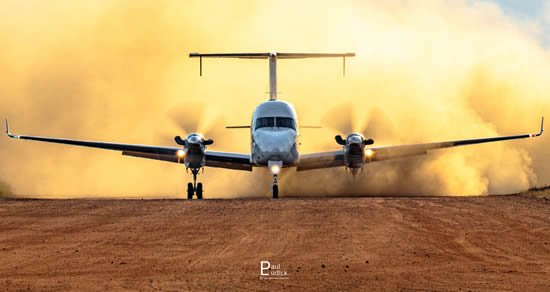
Business aviation serves all types of needs | Photo: Paul Ludick.
Central Africa’s demand is shaped by activity in the Democratic Republic of Congo, where heavy industrial growth is increasing the need for reliable aviation solutions. Companies use private aircraft to transport executives, engineers, and critical supplies safely and quickly between remote mining regions and major business centers. However, the region continues to be hindered by a lack of funding for local airports, limited hangar space, and shortages of adequately trained ground staff. The questions raised by the latest Ebola outbreak may constrain business flights, but business aviation continues to provide vital medical support.
While each region follows its own growth trajectory, all are moving towards greater professionalism, improved infrastructure, and recognition of business aviation as an economic force multiplier.
AfBAA serves as the sector's unified voice, both locally and internationally, leveraging detailed local knowledge to address infrastructure and regulatory gaps for those working in African business aviation and those entering this intricate market. We aim to underpin this activity as we continue with working to ensure that all subsectors are represented and that business aviation continues to fuel commerce, health, and security across industries and nations.