


Cambridge, UKSAF market could reach $50bn by 2036, says IDTechEx |
A new report from market intelligence firm IDTechEx forecasts that the global sustainable aviation fuel (SAF) market could reach US$50 billion in 2036, driven by tightening decarbonisation rules and growing demand for low-carbon transport fuels.
IDTechEx senior technology analyst Eve Pope said aviation and maritime are among the hardest sectors to decarbonise and will require large volumes of alternative fuels to support global net-zero targets. Transportation currently accounts for around 20% of global CO₂ emissions, underlining the scale of the challenge.
The report highlights 2025 as a turning point for SAF, particularly in Europe. In both the UK and the EU, regulations such as ReFuelEU Aviation introduced binding blending targets, creating mandatory large-scale demand for SAF for the first time. IDTechEx expects this demand to rise steadily as regulations become more ambitious.
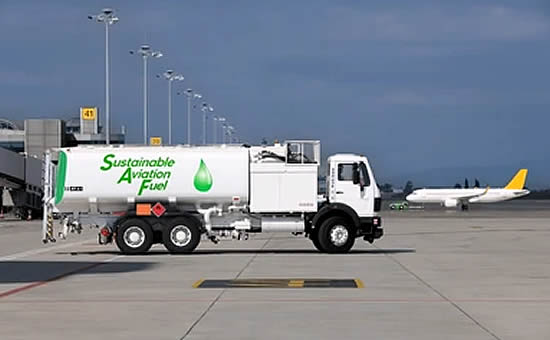
Production pathways and the 'HEFA tipping point'
SAF can be produced through several technology routes. One of the most established is HEFA (Hydroprocessed Esters and Fatty Acids), which uses feedstocks such as used cooking oils and animal fats. HEFA has supported early SAF growth because it is relatively mature and among the lowest-cost production options, with prices closer to conventional jet fuel than other SAF pathways.
However, IDTechEx warns that HEFA feedstocks are limited. Beyond 2030, the industry could hit a “HEFA tipping point”, where demand continues to rise but HEFA supply becomes insufficient. This is expected to accelerate investment in emerging pathways such as alcohol-to-jet, gasification plus Fischer–Tropsch, and e-SAF. While these technologies are less mature, scaling has already begun.
IDTechEx points to LanzaJet’s Freedom Pines Fuels alcohol-to-jet facility, which came online in 2025 and produces 9 million gallons of SAF and 1 million gallons of renewable diesel annually. Even so, high costs remain a major barrier for many next-generation SAF routes.
Other sustainable fuel markets
The report also identifies strong growth potential in renewable diesel, with the US expected to remain a leader due to policy support including the Renewable Fuel Standard, the 45Z tax credit, and the California Low Carbon Fuel Standard.
Demand is also increasing for renewable methanol, driven by cleaner marine fuels, chemical sector decarbonisation, and its role as a potential SAF feedstock via the methanol-to-jet pathway. China is expected to become a leading region for renewable methanol production due to its existing methanol market strength and access to biomass and green hydrogen.
IDTechEx forecasts global renewable diesel and SAF production capacity could exceed 67 million tonnes per year by 2036, growing at a CAGR of 8.1% between 2026 and 2036.
For more information on the “Sustainable Biofuels & E-Fuels Market 2026-2036: Technologies, Players, Forecasts” report, including downloadable sample pages, visit: www.IDTechEx.com/Biofuels




BlueSky Business Aviation News | 22nd January 2026 | Issue #827
